




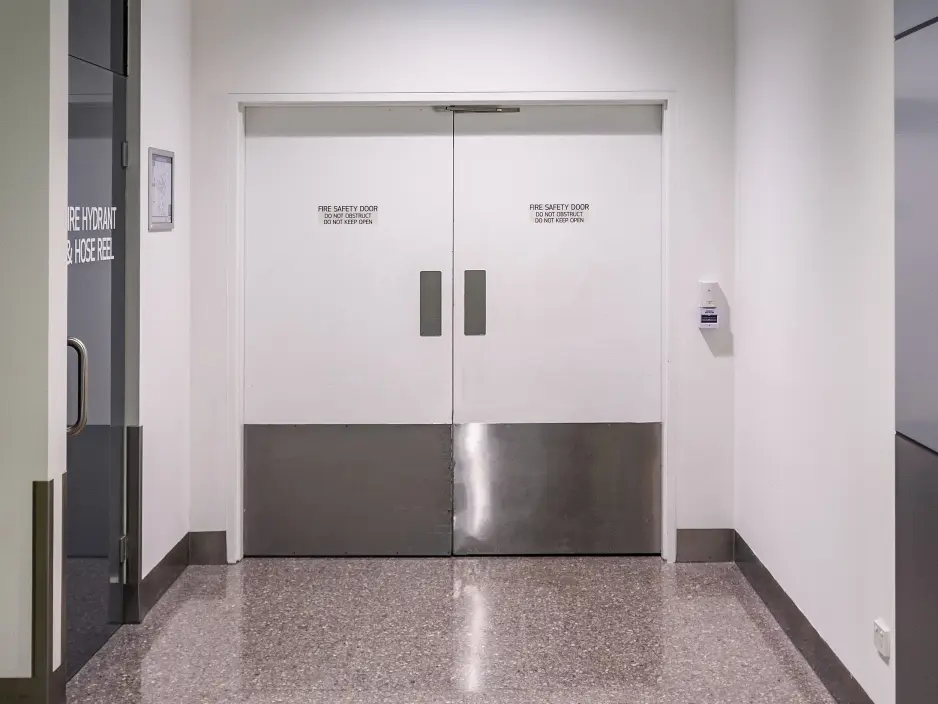
Fire Door Solutions
Fire doors are a critical component of building fire protection systems. Their primary function is to prevent the spread of fire and smoke, safeguarding both human life and property. Below are the main areas where fire doors are applicable, along with the specific problems they address.
Areas of Application for Fire Doors
Commercial Buildings
Shopping Centers:Fire doors can effectively isolate the fire risks between different stores, ensuring the safe evacuation of customers.
Office Buildings:Fire doors are used in stairwells, machine rooms, and other areas to prevent fire from spreading between floors.
Public Places
Hospitals:Installing fire doors in key areas such as patient wards, operating rooms, and medicine storage rooms ensures the safety of personnel and protection of critical equipment.
Schools:Fire doors are installed between classrooms, laboratories, and hallways to ensure students can evacuate promptly in the event of a fire.
Industrial Facilities
Factory Workshops:Fire doors effectively isolate combustible storage areas from production zones, reducing the risk of fires.
Warehouses:In hazardous material storage areas, such as chemical warehouses, fire doors are essential for protecting the environment and personal safety.
Residential Areas
High-rise Residential Buildings:Fire doors in stairwells and elevator lobbies are vital for preventing lateral fire spread, improving the safety of residents.
Hotels
Guest Room Corridors:Installing fire doors ensures the protection of guests during a fire, providing safe escape routes.
Problems Fire Doors Solve
Preventing Fire Spread
The primary function of fire doors is to limit the spread of fire, preventing flames and hot smoke from reaching other areas, thereby providing time for people to evacuate.
Protecting Escape Routes
During a fire, fire doors ensure the smooth functioning of escape routes, allowing people to quickly and safely exit danger zones.
Protecting Firefighting Equipment
Fire doors protect firefighting equipment such as water pipes and fire extinguishers, ensuring they remain operational during a fire.
Reducing Smoke Spread
In addition to preventing fire spread, fire doors effectively reduce the rate of smoke dissemination, minimizing the harmful effects of toxic smoke on human health.
Enhancing Overall Building Safety
By installing fire doors, a building's fire safety rating is improved, ensuring compliance with fire safety regulations and providing a safer environment for occupants.
Minimizing Property Damage
In the event of a fire, fire doors effectively protect property and essential equipment, reducing the economic losses caused by the fire.
Conclusion
Fire doors play a vital role in various locations, designed to enhance the fire safety of buildings. By strategically positioning and installing fire doors, the risk of fire and its associated damage can be effectively minimized, protecting both life and property. Therefore, when designing and renovating buildings, it is essential to prioritize the selection and installation of fire doors in compliance with relevant building fire safety codes, ensuring a safe environment for users.