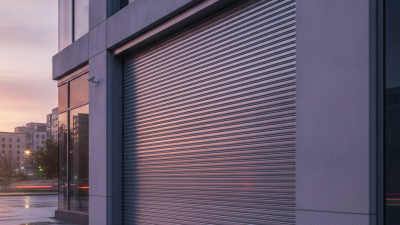
What Are the 2026 Top Overhead Rolling Steel Fire Doors?
Selecting the 2026 top Overhead Rolling Steel Fire Doors requires more than comparing prices or catalog photographs. A dependable evaluation must examine fire ratings, cycle performance, installation quality, and documented testing. NFPA 80, Standard for Fire Doors and Other Opening Protectives, remains a primary reference for inspection, maintenance, and acceptance requirements. UL 10B and UL 10C testing also help verify fire-resistance performance under controlled conditions.
The risk is measurable. NFPA’s Fire Loss in the United States During 2023 reported approximately 1.5 million fires and billions of dollars in direct property damage. These figures explain why a rolling fire door must protect a real opening, not merely satisfy a specification sheet. In a warehouse, the door may separate a loading bay from storage racks. In a hospital, it may shield a corridor crowded with equipment and people.
Performance matters most.
This guide compares leading 2026 solutions through practical criteria, including listed fire ratings, smoke-control options, curtain construction, guides, counterbalance systems, and release mechanisms. It also considers service access, replacement parts, and inspection records. FM Approvals and UL listings can strengthen confidence, but certification does not remove the need for correct field installation. That point is easy to overlook.
Some rankings remain subjective because building use, opening size, climate, and maintenance skill vary widely. A door that performs well in a dry distribution center may struggle in a corrosive coastal facility without suitable materials and servicing. The strongest choices therefore combine tested protection with realistic lifecycle support. This introduction sets the standard for identifying which Overhead Rolling Steel Fire Doors deserve serious consideration in 2026.
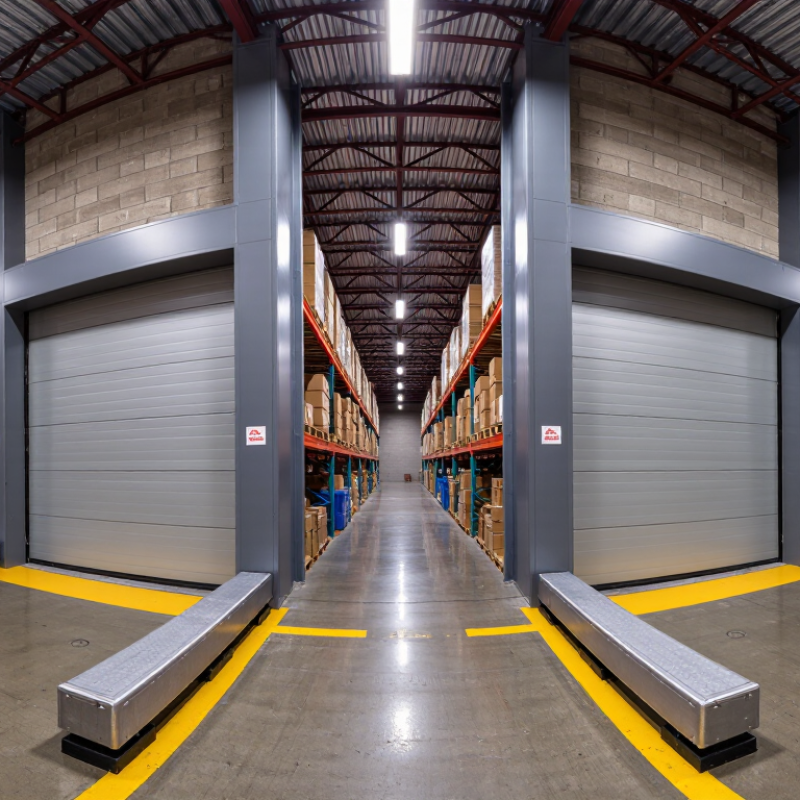
2026 Selection Criteria: UL 10B/10C, NFPA 80, and ASTM E152 Compliance
What are the 2026 top overhead rolling steel fire doors? The answer begins with verified fire performance, not curtain weight or decorative finish. Specify assemblies tested to UL 10B or UL 10C, then confirm the required rating for each opening. UL 10B evaluates fire exposure under neutral pressure. UL 10C adds positive-pressure exposure, which can challenge leakage control around guides and the hood.
NFPA 80 requires proper installation, clearances, fusible links, closing devices, labels, and periodic inspection. A door that passes a laboratory test can still fail through poor field installation. It happens. ASTM E152 remains a useful historical reference for fire-door testing, but its edition and acceptance status require careful review. Confirm current equivalency with the authority having jurisdiction, the listing agency, and the project specification. Do not treat an old test report as automatic 2026 compliance.
The risk is measurable. NFPA’s Fire Loss in the United States During 2022 reported approximately 1.5 million fires and about 3,790 civilian fire deaths. NFPA’s Structure Fires in the United States report also shows that nonresidential buildings continue to produce substantial property losses. Selection should therefore include smoke leakage, cycle testing, corrosion resistance, and documented drop testing. Field experience suggests that guide alignment and bottom-bar contact deserve extra attention. Specifications are sometimes too confident. Verify the label, test standard, rating duration, mounting condition, and inspection records before approval.
Key Components: Galvanized Steel Curtains, Guides, Hoods, and Fusible Links
What Are the 2026 Top Overhead Rolling Steel Fire Doors?
The strongest overhead rolling steel fire doors in 2026 depend on dependable components, not appearance alone. Galvanized steel curtains resist corrosion and provide firm protection across wide openings. Each interlocking slat should move smoothly without excessive noise, binding, or visible distortion. Properly fitted guides keep the curtain aligned during opening and controlled closing. I have seen small guide gaps create larger problems during routine inspections.
A protective hood covers the rolled curtain and reduces exposure to dust, impact, and accidental contact. Its shape should allow practical cleaning and easy access for qualified inspection. Fusible links remain critical because they release the curtain when surrounding heat reaches their rated trigger point. They must stay clean, correctly positioned, and free from paint or obstruction. A door can look excellent yet fail because one small link was neglected. That detail deserves more attention.
Tips: Check the curtain, guides, hood, and fusible links during scheduled inspections. Look for rust, loose fasteners, bent guides, and damaged slats. Test movement carefully under approved procedures. Do not force a sticking curtain. Record unusual sounds and closing speed, even when the door still appears functional. Installation conditions vary, so specifications should be verified against the opening size, fire rating, and site environment. Some advice becomes outdated quickly. Local technical requirements should be confirmed before selection or replacement.
2026 Reference Guide: Overhead Rolling Steel Fire Doors
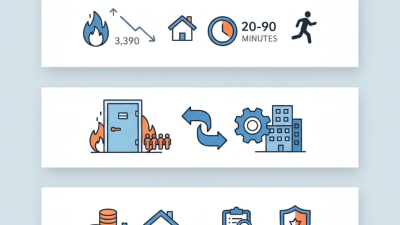
Common fire-resistance rating durations and the key components used in overhead rolling steel fire-door assemblies.
Galvanized Steel Curtain
Interlocking steel slats form the fire-rated barrier and roll into the hood when open.
Guides
Vertical guides retain the curtain, support controlled travel, and help limit flame and smoke spread at the edges.
Hood
The hood encloses the coiled curtain and protects the rolling mechanism above the opening.
Fusible Link
A heat-responsive release device allows the curtain to close automatically when its specified temperature is reached.
The chart presents rating durations commonly used in fire-door specifications: 60, 90, and 180 minutes. Actual selection depends on the tested assembly, opening conditions, fire-protection requirements, and applicable building codes.
Performance Metrics: Self-Closing Speed, Smoke Control, and Cycle Ratings
What Are the 2026 Top Overhead Rolling Steel Fire Doors?
In 2026, strong overhead rolling steel fire doors are judged by measured performance, not appearance. Self-closing speed deserves close attention. A door that closes in eight seconds may protect an opening better than one that drifts shut for thirty seconds. However, speed must remain controlled. Excessive force can damage guides, injure users, or prevent reliable latching. During site inspections, technicians should test closing performance with the door fully open and partially released. Record the time, floor clearance, and latch engagement. Small details matter.
Smoke control is another practical measure. A fire door should limit smoke movement when properly installed, maintained, and sealed. Inspectors often check edge gaps, bottom seals, guides, and nearby wall conditions. Smoke can travel through a small uneven opening. It is surprisingly persistent. A listed fire door may still perform poorly when installation tolerances are ignored. This point is sometimes underestimated. Smoke control claims must match the tested assembly, not merely the curtain material.
Cycle ratings show expected operating endurance under defined test conditions. Common ratings may include thousands or tens of thousands of cycles, but the number alone proves little. A busy loading area needs a higher rating than a quiet utility room. Track actual daily use, maintenance history, and emergency releases. I would not select a door from cycle numbers alone. Laboratory testing cannot reproduce every bent guide, dirty threshold, or hurried operator. Independent inspection records and documented field commissioning provide stronger evidence for a dependable 2026 installation.
What Are the 2026 Top Overhead Rolling Steel Fire Doors? – Performance Metrics: Self-Closing Speed, Smoke Control, and Cycle Ratings
| Performance Class |
Nominal Fire Rating |
Typical Application |
Self-Closing Performance |
Smoke-Control Performance |
Cycle Rating |
Relevant Verification |
| Premium High-Cycle Fire Door |
3 hours |
High-rise construction, fire barriers, industrial openings, and high-frequency logistics areas. |
Automatic closure after release; typical controlled closing target of approximately 8–15 seconds, subject to opening size and tested hardware. |
Smoke seals and guides configured for reduced air leakage; smoke leakage must be established by the complete tested assembly. |
50,000+ cycles |
Fire test to UL 10B or UL 10C; installation and closing provisions under NFPA 80; smoke testing where specified by the project. |
| Heavy-Duty Fire Door |
1½ hours |
Parking structures, warehouses, manufacturing plants, and service-room separations. |
Automatic self-closing operation; typical controlled closing target of approximately 8–15 seconds. |
Perimeter and bottom seals may be used to limit smoke migration; performance depends on tested clearances, seals, and installation. |
25,000–50,000 cycles |
Fire-rated assembly tested to an applicable fire-door standard and installed in accordance with NFPA 80. |
| Commercial High-Performance Fire Door |
1 hour |
Retail facilities, commercial kitchens, corridors, utility rooms, and interior fire separations. |
Automatic closure from the fire-release system; typical controlled closing target of approximately 10–20 seconds. |
Smoke-control capability should be confirmed through a listed smoke-door or air-leakage test when required by the code or specification. |
20,000–25,000 cycles |
Fire-door listing, fusible-link or detector release, automatic closing device, and field acceptance inspection. |
| Standard Commercial Fire Door |
45 minutes |
Small commercial openings, tenant areas, storage rooms, and rated corridor partitions. |
Automatic self-closing operation after alarm or thermal release; typical controlled closing target of approximately 10–20 seconds. |
Basic smoke resistance may be provided by listed guides and perimeter components; an explicit smoke-leakage rating is not automatic. |
10,000–20,000 cycles |
Listed fire-door assembly, compliant hardware, required signage, and inspection under the adopted building and fire codes. |
| Light-Duty Rated Rolling Door |
20 minutes |
Limited-use storage rooms, low-traffic service openings, and selected smoke or draft-control locations. |
Automatic closure is required when the door is used as a fire-protective opening; timing is determined by the listed assembly and installation. |
Suitable only where the listed assembly and project code requirements provide adequate smoke and draft control. |
10,000 cycles |
Confirm the exact listing, wall type, clearances, release method, and inspection requirements before installation. |
Technical notes:
Cycle figures are representative performance bands used for specification comparison and are not a substitute for a product’s certified test report. Fire ratings apply to complete door assemblies, including curtain, guides, barrel, brackets, sill conditions, wall construction, release devices, and installation. Self-closing speed is affected by door width, height, spring or counterbalance condition, temperature, and maintenance. Smoke-control performance should be verified through the applicable listed smoke or air-leakage test, such as UL 1784 where required. Always confirm the adopted edition of NFPA 80, the local building code, and the authority having jurisdiction before selecting a door.